
What Does “Buildable Land” Mean in Costa Rica Real Estate?
Buying land in Costa Rica can be an exciting opportunity, especially for buyers planning to build a vacation home, investment property, or permanent residence. But before purchasing a lot, there is one important question every buyer should ask:
Is the land actually buildable?
In Costa Rica real estate, a property being available for sale does not automatically mean that a house or other structure can be built on it. Buildability depends on several factors, including land-use regulations, access, water availability, environmental considerations, and the property’s legal and physical characteristics.
Understanding what buildable land in Costa Rica means can help buyers avoid costly surprises and make better-informed property decisions.
What Is Buildable Land in Costa Rica?
Buildable land is property that meets the legal, regulatory, environmental, and practical requirements necessary for construction.
A parcel may look ideal on a map or during a property tour, but buyers should verify whether the land can legally and practically support the type of development they have in mind.
For example, a buyer interested in building a home should investigate whether the property has:
- Appropriate land-use authorization
- Legal access
- A viable water source
- Suitable topography
- Required permits and approvals
- No restrictions that prevent the intended construction
- Appropriate infrastructure or access to necessary services
The exact requirements can vary depending on the property’s location and intended use.
Why Isn’t Every Piece of Land Buildable?
One of the most important things for international buyers to understand is that owning land does not automatically mean you can build whatever you want on it.
Costa Rica has regulations governing land use and development. A property may face limitations because of its zoning, environmental characteristics, water availability, location, access, or other legal considerations.
This is why buyers should investigate buildability before committing to a land purchase.
A beautiful parcel with ocean views may seem like the perfect place for a home, but its development potential needs to be verified independently.
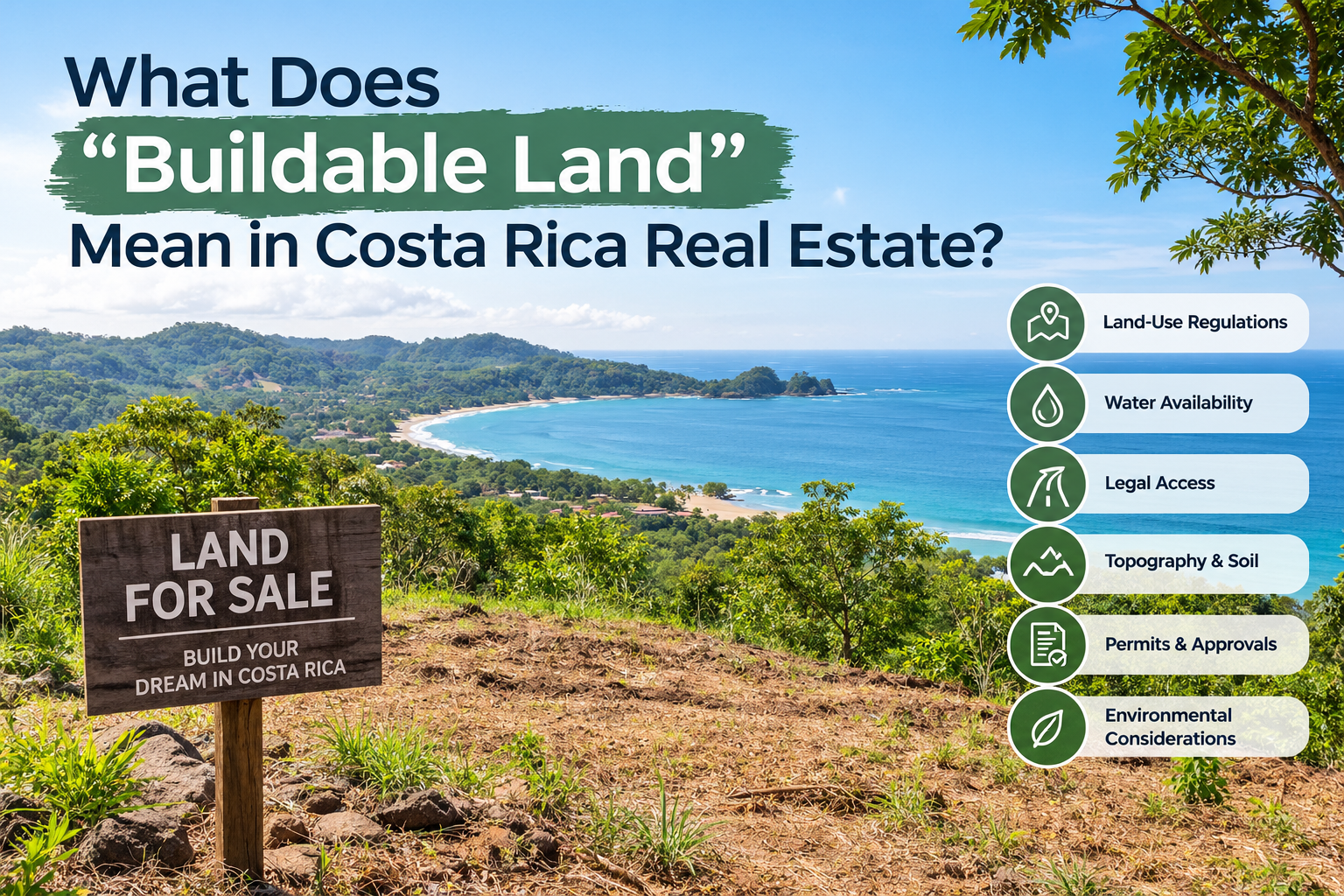
7 Things to Check Before Buying Buildable Land in Costa Rica
1. Land-Use Regulations
One of the first things buyers should investigate is how the property can legally be used.
Land-use rules can affect whether a parcel can be developed for residential, commercial, agricultural, tourism, or other purposes.
The intended use matters. A parcel suitable for one type of development may not necessarily be suitable for another.
Ask: What type of development is permitted on this property?
2. Water Availability
Water is one of the most important considerations when evaluating land for construction.
Before buying, buyers should determine whether the property has a legally recognized and reliable source of water suitable for the intended development.
This is particularly important when purchasing undeveloped land because the availability of a suitable water source can influence whether construction is feasible.
Ask: What water source serves the property, and has its availability been properly verified?
3. Legal Access to the Property
A property may be physically reachable but still require careful investigation of its legal access.
Buyers should determine how the property connects to public roads and whether any access rights or easements apply.
This is especially important for rural or larger parcels where access roads may cross other properties.
Ask: Does the property have legally established access, and are there any easements or right-of-way considerations?
4. Property Boundaries and Survey Information
A professional property survey can help buyers understand the property’s actual boundaries, dimensions, and relationship to surrounding land.
This becomes particularly important when evaluating whether there is enough usable space for a planned home, driveway, pool, guest house, or other improvements.
A parcel’s total size does not necessarily tell you how much of it is practically usable for construction.
5. Topography and Soil Conditions
A flat-looking property and a steep hillside can have very different development requirements.
Slopes, drainage, soil conditions, rock formations, and other physical characteristics can influence construction costs and feasibility.
A buyer should therefore look beyond the property’s acreage and consider its usable building area.
For example, a large parcel with significant slopes may have less practical building space than a smaller, relatively level property.
6. Environmental Restrictions
Costa Rica’s natural environment is one of the country’s biggest attractions, but environmental considerations can also affect development.
Properties near environmentally sensitive areas, waterways, forests, protected zones, or other regulated areas may have additional requirements or restrictions.
A buyer should determine whether environmental considerations could affect the proposed development before assuming that the entire parcel is available for construction.
7. Permits and Development Requirements
Even when land appears suitable for construction, the proposed project may still require the appropriate permits and approvals.
The requirements can depend on the property’s location, intended use, size, design, infrastructure, and other factors.
This is why buyers should work with qualified local professionals who can evaluate the property and proposed project before construction begins.
Buildable Land vs. Undeveloped Land: What’s the Difference?
These terms are sometimes used interchangeably, but they don’t necessarily mean the same thing.
Undeveloped land generally refers to property that does not currently have buildings or significant improvements.
Buildable land refers to property that can legally and practically support development, subject to the applicable regulations and approvals.
Therefore, undeveloped land can be buildable, but not every undeveloped parcel should automatically be assumed to be buildable.
This distinction is particularly important when comparing Costa Rica land listings.
Does “Buildable” Mean You Can Build Anything You Want?
No.
Buildable does not mean unrestricted.
A property may be suitable for construction while still being subject to limitations involving:
- Building size
- Setbacks
- Height
- Density
- Land use
- Environmental considerations
- Road access
- Water
- Infrastructure
- Local development rules
The specific requirements depend on the property and proposed project.
For this reason, buyers should evaluate what can be built, not simply whether a listing describes the property as “buildable.”
How Can International Buyers Verify Whether Land Is Buildable?
International buyers should avoid relying solely on a property’s marketing description.
Instead, consider conducting proper due diligence before purchasing.
A typical evaluation may involve reviewing the property’s legal documentation, survey information, land-use requirements, access, water availability, environmental considerations, and other factors relevant to the proposed development.
Working with qualified Costa Rica real estate, legal, engineering, and other local professionals can help buyers understand the property’s actual development potential.
The right professionals can also help identify potential issues that may not be obvious during a property viewing.
What Questions Should You Ask Before Buying Land?
If you are considering purchasing land in Costa Rica, ask questions such as:
- Is the property legally accessible?
- What is the permitted land use?
- Is there a verified water source?
- Are there any easements or right-of-way issues?
- Are there environmental restrictions affecting the property?
- What portion of the property is realistically suitable for construction?
- What approvals would be required for the intended project?
- Are there existing surveys and relevant property documents?
- Are utilities or other infrastructure available?
- Have qualified professionals reviewed the property?
These questions can help turn a simple land search into a more informed real estate decision.
Is Buildable Land More Valuable?
Potentially, yes.
A parcel with verified development potential can be more attractive to buyers than land with uncertain restrictions or unresolved access and infrastructure questions.
However, value depends on much more than buildability alone.
Location, views, accessibility, parcel size, water availability, surrounding development, infrastructure, zoning, and market demand can all influence the value of Costa Rica land.
A smaller parcel in a highly desirable location may therefore be more valuable than a much larger parcel with limited development potential.
Why Buildability Matters for Costa Rica Real Estate Investors
For investors, buildability can directly affect the property’s future potential.
A buyer may purchase land intending to:
- Build a vacation home
- Develop a rental property
- Create a larger residential project
- Hold the land for future development
- Build a second home
- Develop a hospitality-oriented property
Each strategy requires different considerations.
Before purchasing, investors should therefore evaluate whether the property’s development potential matches their investment plan.
Final Thoughts
Buildable land in Costa Rica is more than an empty parcel that appears suitable for construction. It is land whose legal, regulatory, environmental, physical, access, and infrastructure considerations allow the intended development to be realistically pursued, subject to the required approvals.
For international buyers, understanding these factors is an important part of Costa Rica real estate due diligence.
If you are considering land in Guanacaste or another part of Costa Rica, don’t evaluate a property based only on its size, price, or views. Look at the bigger picture and understand what you can actually do with the land.
A property with verified development potential can provide significantly more clarity for buyers planning their next Costa Rica real estate investment.
Frequently Asked Questions
What does buildable land mean in Costa Rica?
Buildable land is property that can legally and practically support the intended type of development, subject to applicable land-use regulations, permits, access, water, environmental considerations, and other requirements.
Can you build on any land you buy in Costa Rica?
No. Purchasing property does not automatically guarantee unrestricted construction rights. Buyers should verify land-use rules, access, water availability, environmental considerations, and applicable permits before purchasing.
Is undeveloped land the same as buildable land?
No. Undeveloped land simply means the property does not currently have significant development. Buildable land must also meet the requirements necessary for the intended construction.
Why is water important when buying land in Costa Rica?
A reliable and legally recognized water source can be an important consideration when determining whether a property can support the intended development.
Should foreigners verify buildability before buying Costa Rica land?
Yes. International buyers should conduct appropriate due diligence and work with qualified local professionals to understand the property’s legal and development potential before purchasing.
Is beachfront land always buildable in Costa Rica?
No. A property’s beachfront location does not automatically mean unrestricted construction is permitted. Coastal, environmental, land-use, access, and other regulations may affect development.
What should I check before buying Costa Rica land?
Buyers should investigate land use, legal access, water availability, property boundaries, topography, environmental considerations, permits, infrastructure, and other factors relevant to the intended development.